

Healthy bone supports physical activity and overall health. Two nutrients, calcium and vitamin D, are particularly needed for strong bones. In addition, calcium and vitamin D are essential for other bodily functions.
The role of calcium
Calcium is the most abundant mineral in the body. It is rich in many foods, such as milk, fortified plant-based beverages, dark green vegetables and fish with soft bones that are eaten 1. Calcium is not only essential for maintaining the structure and function of bone and teeth, but also important for proper muscle function, nerve transmission and hormonal secretion 1, 2. An adequate intake of calcium and vitamin D, along with a healthy diet and physical activity, may help prevent bone loss/osteoporosis 3.
If the intake of calcium is insufficient, you will not notice an obvious symptom in the short term. It is because the body maintains blood calcium levels by breaking down bone to release calcium. Over the long term, insufficient calcium intake leads to health consequences, such as low bone mass (osteopenia) and increased risk of osteoporosis and bone fractures 2.
Are you getting enough calcium?
The research in the United States shows that, boys aged 9 to 13 years, girls aged 9 to 18 years, women older than 50 years, men older than 70 years are considered more at risk of not getting recommended amounts of calcium from the foods 2. For Canadians, the prevalence of inadequate calcium intake varies widely at a national level, but tends to increase with age and is higher in women than men 1.
Based on food intakes only:
- For children aged 1-3, about 97% of them had adequate intakes of calcium. However, only about 23% of children aged 4-8 had inadequate intakes of calcium.
- For adolescents aged 9-18, 33-44% of boys and 67-70% of girls had inadequate intakes of calcium.
- For adults, 27-80% of men and 48-87% of women had inadequate intakes of calcium, depending on the age group 1.
- How much calcium do you need?
- The amount of calcium you need each day depends on your age and gender. Recommended Dietary Allowance (RDA) and Adequate intake* (AI) are listed below:
Life Stage Group Calcium (mg/day)
- Infants 0-6 months 200* 7-12 months 260*
- Children 1-3 years 700 4-8 years 1,000
- Adolescent Males 9-13 years 1,300 14-18 years 1,300
- Adult Males 19-30 years 1,000 31-50 years 1,000 51-70 years 1,000 More than 70 years 1,200
- Adolescent Females 9-13 years 1,300 14-18 years 1,300
- Adult Females 19-30 years 1,000 31-50 years 1,000 51-70 years 1,200 More than 70 years 1,200
- Pregnancy 14-18 years 1,300 19-50 years 1,000
- Breastfeeding 14-18 years 1,300 19-50 years 1,000
Recommended Dietary Allowance (RDA):
The average daily dietary nutrient intake level sufficient to meet the nutrient requirements of nearly all (97-98%) healthy individuals in a particular life stage and gender group.
Adequate Intake (AI):
The recommended average daily intake level based on observed or experimentally determined approximations or estimates of nutrient intake by a group (or groups) of apparently healthy people that are assumed to be adequate. An AI is used when a RDA cannot be determined 3.
The role of vitamin D
Vitamin D is a fat-soluble vitamin that is naturally present in very few foods, such as fatty fish and egg yolks 4. In Canada, cow's milk and margarine are all fortified and can be the dietary sources of vitamin D. Vitamin D can also be synthesized by the body after skin exposed to ultraviolet rays from sunlight 1. Vitamin D is an important nutrient that helps the body to absorb and use calcium and phosphorus. It helps in the development and maintenance of bones and teeth 3. Together with calcium, vitamin D helps protect people from osteoporosis in later life. Additionally, vitamin D plays a vital role in neuromuscular and immune function, and reduction of inflammation 4.
The inadequate vitamin D level results in symptoms such as bone pain and muscle weakness. However, it may be hard to be detected at the initial stages 4. Vitamin D deficiency leads to diseases, which are known as rickets in children and osteomalacia or osteoporosis in adults. In children, rickets results in soft bones and skeletal deformities. In adults, osteomalacia causes soft and weak bones, while osteoporosis leads to fragile bones and an increased risk of fractures 1, 4.
Are you getting enough vitamin D?
Vegetarian or ovo-vegetarian, and people who have a milk allergy, lactose intolerance may more likely have a vitamin D deficient diet. Additionally, some groups are more at risk of vitamin D inadequacy, such as breastfed infants, older adults, people with limited sun exposure, people with dark skin, people with fat malabsorption, people who are obese or who have undergone gastric bypass surgery 4.
When considering food intake only, 75-96% of Canadian have a prevalence of inadequate vitamin D intake. However, the food intake may not give a true picture of the vitamin D status in the body, because both dietary intake and sunlight exposure contribute to the overall
vitamin D level. The available clinical data of vitamin D blood levels do not suggest wide-spread vitamin D deficiency at a national level 1. About 40% of Canadians were below the cut-off of vitamin D blood level for healthy bones in winter, while 25% of that in the summer 5.
Overall, it is difficult to obtain sufficient vitamin D from natural food sources alone 4. Moreover, the long winter in Canada makes people less likely to get enough sunshine. Health Canada recommends that all breastfed or partially breastfed infants and children aged 0-24 months, adults aged over 50 take a daily vitamin D supplement of 10 micrograms (equivalent to 400 International Units) 1, 6, 7.
How much vitamin D do you need?
Tablet below showing the amount of vitamin D you need each day from foods and supplements. Recommended Dietary Allowance (RDA) and Adequate intake* (AI) are listed:
Life Stage Group Vitamin D (μg /day)
- Infants 0-6 months 10* 7-12 months 10*
- Children 1-3 years 15 4-8 years 15
- Adolescent Males 9-13 years 15 14-18 years 15
- Adult Males 19-30 years 15 31-50 years 15 51-70 years 15 More than 70 years 20
- Adolescent Females 9-13 years 15 14-18 years 15
- Adult Females 19-30 years 15 31-50 years 15 51-70 years 15 More than 70 years 20
- Pregnancy 14-18 years 15 19-50 years 15
- Breastfeeding 14-18 years 15 19-50 years 15
Recommended Dietary Allowance (RDA):
The average daily dietary nutrient intake level sufficient to meet the nutrient requirements of nearly all (97-98%) healthy individuals in a particular life stage and gender group.
Adequate Intake (AI):
The recommended average daily intake level based on observed or experimentally determined approximations or estimates of nutrient intake by a group (or groups) of apparently healthy people that are assumed to be adequate. An AI is used when a RDA cannot be determined 3.
We are pleased to introduce you to two Quest® supplements:
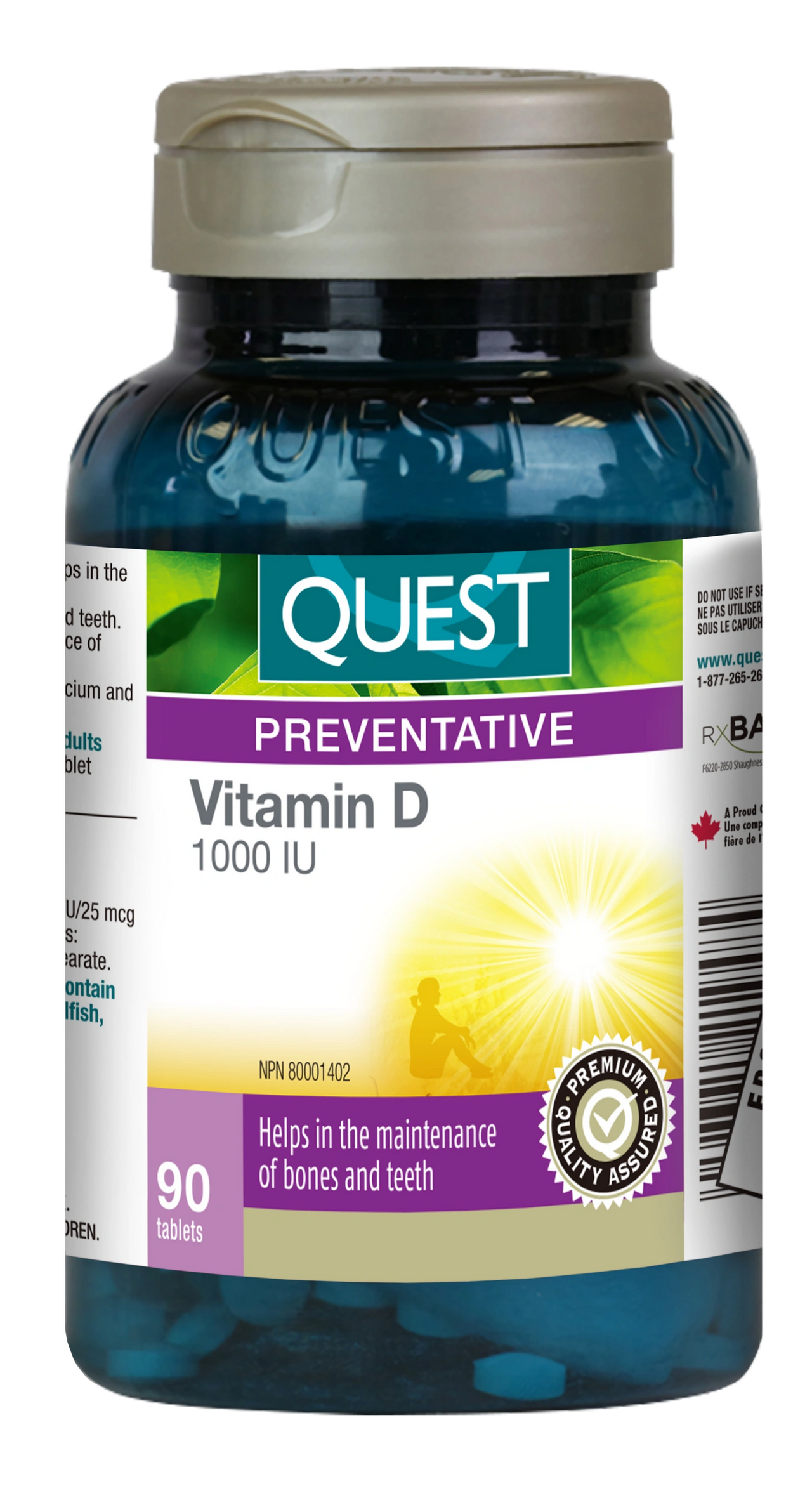
- Quest® Vitamin D 1000 IU (90 Tablets)
Quest® Vitamin D3 1000 IU is a superior supplement of the most bioavailable form of vitamin D. Vitamin D3 (cholecalciferol) is derived from lanolin from sheep’s wool.
· Each tablet contains 25 μg/1000 IU of vitamin D, the maximum allowed in a Canadian supplement.
· Adults and children take 1 tablet daily, or as directed by a health care practitioner.
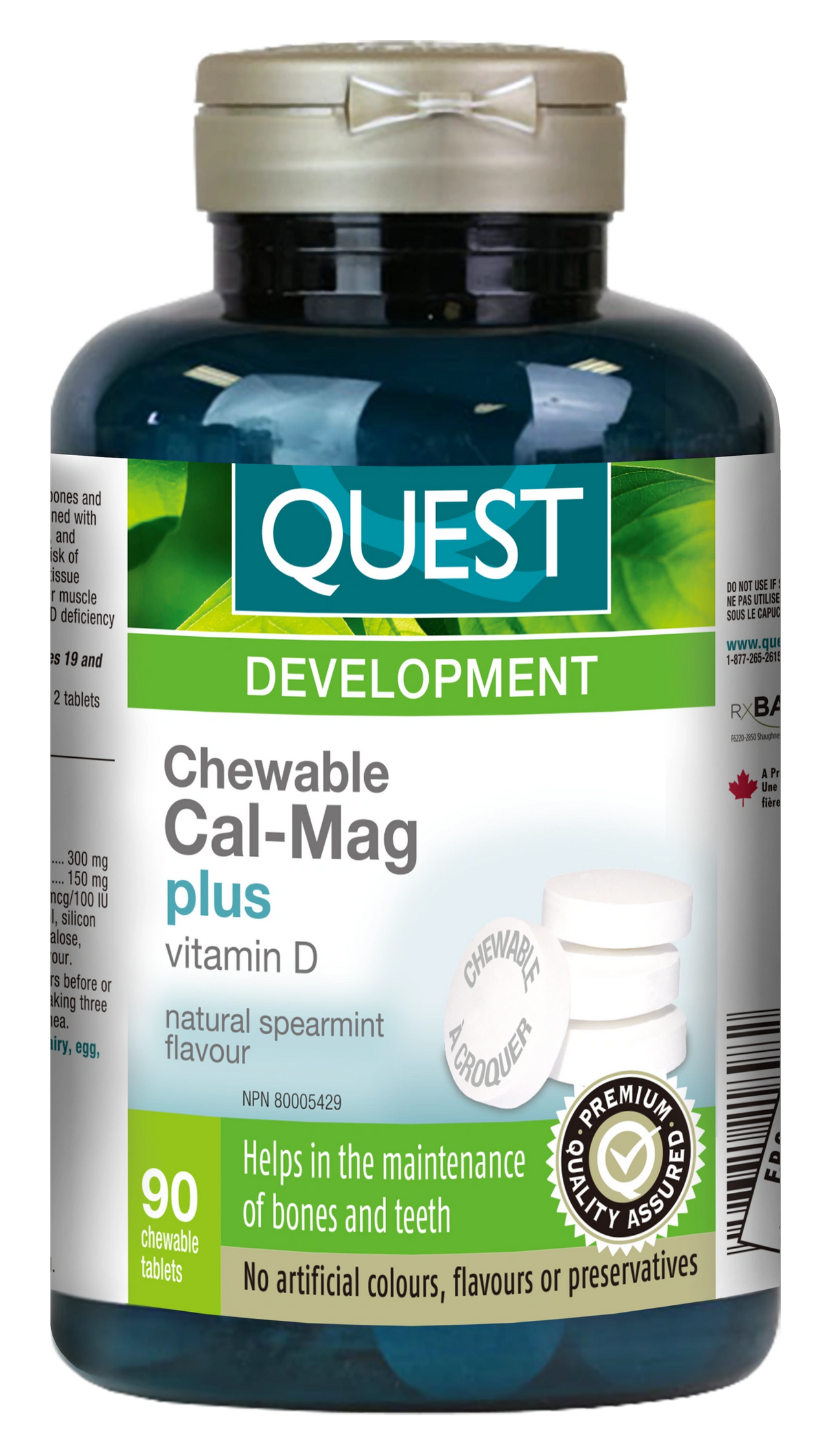
- Quest® Cal-Mag Chewable (90 Tablets)
Quest Cal-Mag Chewable is a high-quality supplement containing calcium and magnesium in a 2:1 ratio, plus vitamin D3. The spearmint flavour gives this product a refreshing taste and makes it ideal for those who want the benefits of a high potency calcium and magnesium supplement, but have difficulty swallowing tablets.
· Each tablet contains calcium 300 mg, magnesium 150 mg and vitamin D 2.5 μg/100 IU.
· Adolescents (ages 9 to 18) take 2 tablets daily.
· Adults take 1 tablet up to 3 times daily, or as directed by a health care practitioner.
References
1. Health Canada. Vitamin D and Calcium: Updated Dietary Reference Intakes. Available at: https://www.canada.ca/en/health-canada/services/food-nutrition/healthy-eating/vitamins-minerals/vitamin-calcium-updated-dietary-reference-intakes-nutrition.html (accessed July 13, 2020).
2. U.S. Department of Health & Human Services. National Institutes of Health. Calcium Fact Sheet for Health Professional. Available at: https://ods.od.nih.gov/factsheets/Calcium-HealthProfessional/ (accessed July 13, 2020).
3. Health Canada. Natural Health Products Ingredients Database. Multi-Vitamin/Mineral Supplements Monograph. Available at: http://webprod.hc-sc.gc.ca/nhpid-bdipsn/atReq.do?atid=multi_vitmin_suppl&lang=eng (accessed July 13, 2020).
4. U.S. Department of Health & Human Services. National Institutes of Health. Vitamin D Fact Sheet for Health Professional. Available at: https://ods.od.nih.gov/factsheets/Calcium-HealthProfessional/ (accessed July 15, 2020).
5. Janz, T. & Pearson, C. Vitamin D blood levels of Canadians. Statistics Canada Catalogue no. 82-624-x. Available at: https://www150.statcan.gc.ca/n1/pub/82-624-x/2013001/article/11727-eng.htm (accessed July 15, 2020)
6. Health Canada. Nutrition for healthy term infants: Recommendations from birth to six months. Available at: https://www.canada.ca/en/health-canada/services/canada-food-guide/resources/infant-feeding/nutrition-healthy-term-infants-recommendations-birth-six-months.html (accessed July 15, 2020).
7. Health Canada. Nutrition for Healthy Term Infants: Recommendations from Six to 24 Months. Available at: https://www.canada.ca/en/health-canada/services/canada-food-guide/resources/infant-feeding/nutrition-healthy-term-infants-recommendations-birth-six-months/6-24-months.html (accessed July 15, 2020)