

As exam season approaches from the corner, and the new year looms before us, it’s only normal to feel stress towards the future. Stress is a natural reaction to these situations: chemicals and hormones surge throughout your body as a response to stimuli or fear and trigger the fight or flight response. Our central nervous system is in charge of this. In particular, a gland in our brain informs the body to release stress hormones adrenaline and cortisol, which revs up our heartbeat and sends blood to areas that need it under emergency circumstances. When the stimuli is gone, all the systems are then told to go back to normal by the brain. Although this may seem bad, it’s a mechanism that helped our ancestors survive in the harsh wilderness.
What are its effects?
In order to adequately prepare our bodies for danger, our bodies physically alter its functions to fuel different systems efficiently. Some changes you may notice include
- An increased heart rate
- Heavy breathing or faster breathing rate
- Sweating
- Upset stomach and
- Tensed up muscles
These are common impacts of stress on our bodies. It also impacts each of our systems differently:
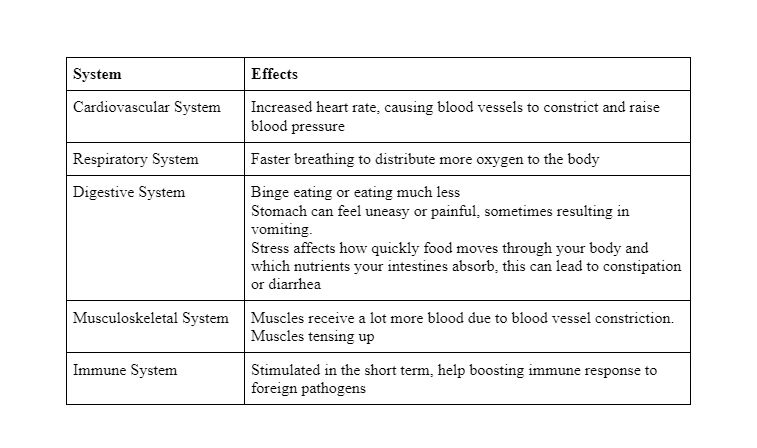
What is chronic stress?
Chronic stress is a prolonged period of stress. While stress over a short term is not harmful and may even be beneficial, chronic stress can greatly compromise physical and mental health. The effects of stress on the body is amplified over a long period of time and in turn, damages the systems. Chronic stress can affect your overall well-being and cause a variety of symptoms such as
- Irritability
- Anxiety
- Depression
- Insomnia
Some other issues because of prolonged stress responses include
- Overworked heart, since it pumps faster
- Increased chances of stroke or heart attack due to raised blood pressure
- Diarrhea or constipation
- Headaches or muscle aches
- Weakened immune system
- Type 2 diabetes as stress inhibits glucose production
- Osteoporosis
What are some ways to deal with stress?
Stress management is a critical point of a healthy lifestyle. Seeing how stress can be healthy in some situations, learning how to properly deal with stress is learning how to manage it rather than getting rid of it completely. There are a variety of tips on how to do so:
- Maintaining a healthy diet
- Aiming for 7-8 hours of quality sleep each night
- Regular exercise
- Minimizing caffeine and alcohol
- Staying socially connected
- Making time for yourself to get self care and rest
- Learning meditation techniques (like deep breathing)
If you’re unable to manage stress, or if it’s accompanied by other concerns like anxiety or depression, you should consult your doctor.
Why do supplements help?
Supplements are simple to incorporate into your lifestyle and contribute to a healthy life when used appropriately. They are almost free of side effects and may provide secondary benefits for the heart, bones, brain and more. B vitamins, in particular, help manage chemicals that cause us anxiety, stress and depression. They are naturally occurring in many foods, but taking supplements may help provide what is missing in your diet or nutrients from foods you don’t like. When your body is deficient in B vitamins, red blood cells are less sufficient. Your body needs these vitamins to produce amino acids, nucleic acids, and energy. Supplements boost red blood cells and can make a big difference on your health and mood.
What are some supplements I can take?
QUEST® SUPER STRESS MEGA B COMPLEX PLUS VITAMIN C
- Quest® Super Stress B + C 1000 mg is a high-quality, high-potency B-complex supplement with added vitamin C, making this an excellent formula for helping the body deal with the effects of stress.
- Recommended use: Helps to maintain good health.
- Recommendations: Adults take 1 tablet daily, or as directed by health care practitioner.
Where can I find more information?
Sources:
- American Psychological Association. (n.d.). Stress effects on the body. American Psychological Association. https://www.apa.org/topics/stress/body.
- The effects of STRESS: Reading comprehension. English Language Centre at UVic. (n.d.). https://continuingstudies.uvic.ca/elc/studyzone/490/reading/stress3-reading.
- the Healthline Editorial Team. (2020, February 25). The basics of stress. Healthline. https://www.healthline.com/health/stress.
- How to Use Vitamin B to relieve anxiety attacks & stress. sho Nutrition LLC. (n.d.). https://www.shonutrition.com/blogs/tips-to-boost-your-energy-levels/how-to-use-vitamin-b-for-anxiety-attacks-stress.
- Johnson, J. (n.d.). Vitamin B For Anxiety, Depression and Stress. Anxiety Relief Techniques. https://anxietyreliefstress.com/vitamin-b-for-anxiety-depression-and-stress/.
- Pietrangelo, A. (2020, March 29). The effects of stress on your body. Healthline. https://www.healthline.com/health/stress/effects-on-body.
- Stress effects. The American Institute of Stress. (2020, June 16). https://www.stress.org/stress-effects.
- Yaribeygi, H., Panahi, Y., Sahraei, H., Johnston, T. P., & Sahebkar, A. (2017, July 21). The impact of stress on body function: A review. EXCLI journal. https://www.ncbi.nlm.nih.gov/pmc/articles/PMC5579396.